
Introducing Goddess Bible Study
A new podcast and discussion group

God has a Mother and the Bible tells the story of their divorce.
I am reviving this Substack after a hiatus in support of my new podcast and discussion group, Goddess Bible Study.
This is a once-a-week Bible study will explore scripture from the perspective of the goddesses, matriarchs, queens, prophetesses, priestesses, and prostitutes who appear in the text but whose stories are often cut short.
We will examine evidence that the Hebrew prophets and Biblical writers pursued an elaborate theological exercise to purge the mother goddess from Israelite culture and tradition.
Abrahamic monotheism is by definition religion with no divine mother, as God is omnipotent and operates alone. The Israelites did originally have a mother goddess though and it took centuries to get rid of her, but she never actually went away, she was hidden from us.
The divorce of the mother goddess was the final and most important step in the transition from paganism to monotheism.
We have felt the results of this divorce for millennia in all the miserable ways that society treats both women and nature.
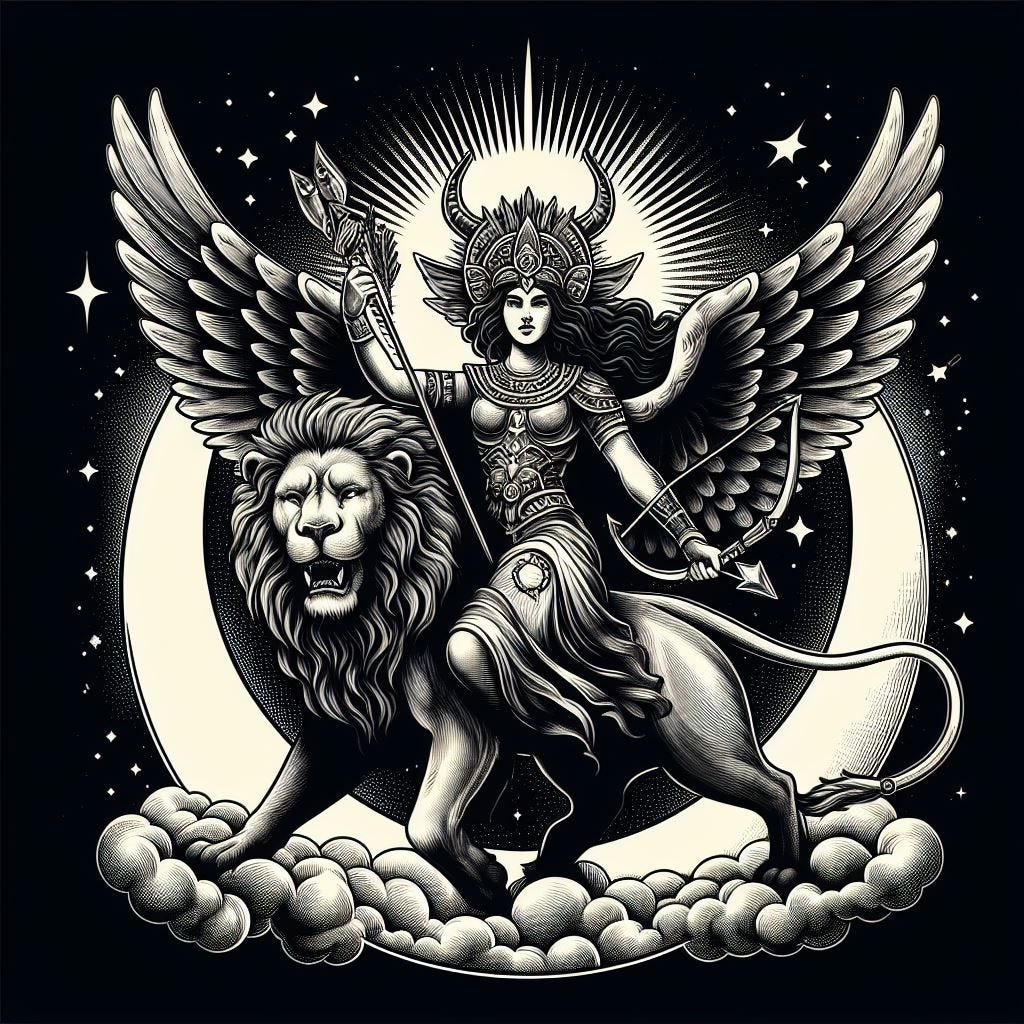
The historical Israelites were pagan, and they underwent a dramatic religious reformation and culture war in the first temple period as their society shifted from tribes to kingship. The followers of Yahweh were revolutionaries who centralized their religion around one god and shut down many old rival traditions.
The prophets of Yahweh went to war with the goddesses Asherah, Astarte, and Anat, and their qedesha priestesses. The Yahwists were ultimately victorious in their spiritual warfare and succeeded in putting an end to the women’s traditions.
It is worth noting that qedesha means “holy ones,” but the name of these most-honored women is deliberately mistranslated as “temple-prostitutes” in English Bibles.
This is a good example of the evidence we will be exploring in Goddess Bible Study as we try to understand what the old nature-based mother goddess traditions were all about and what we can learn from them today.
I personally feel that reconnecting to the divine mother is critical in the effort to create an ecological civilization and also for women to find their collective power and authority.
Live discussion Tuesday nights at 7pm EST
Feel free to reach out and join in!
goddessbiblestudy@gmail.com
Goddess Bible Study on YouTube
Ep 1: Introduction to Goddess Bible Study
Ep 2 - Genesis 1: The Waters of Creation
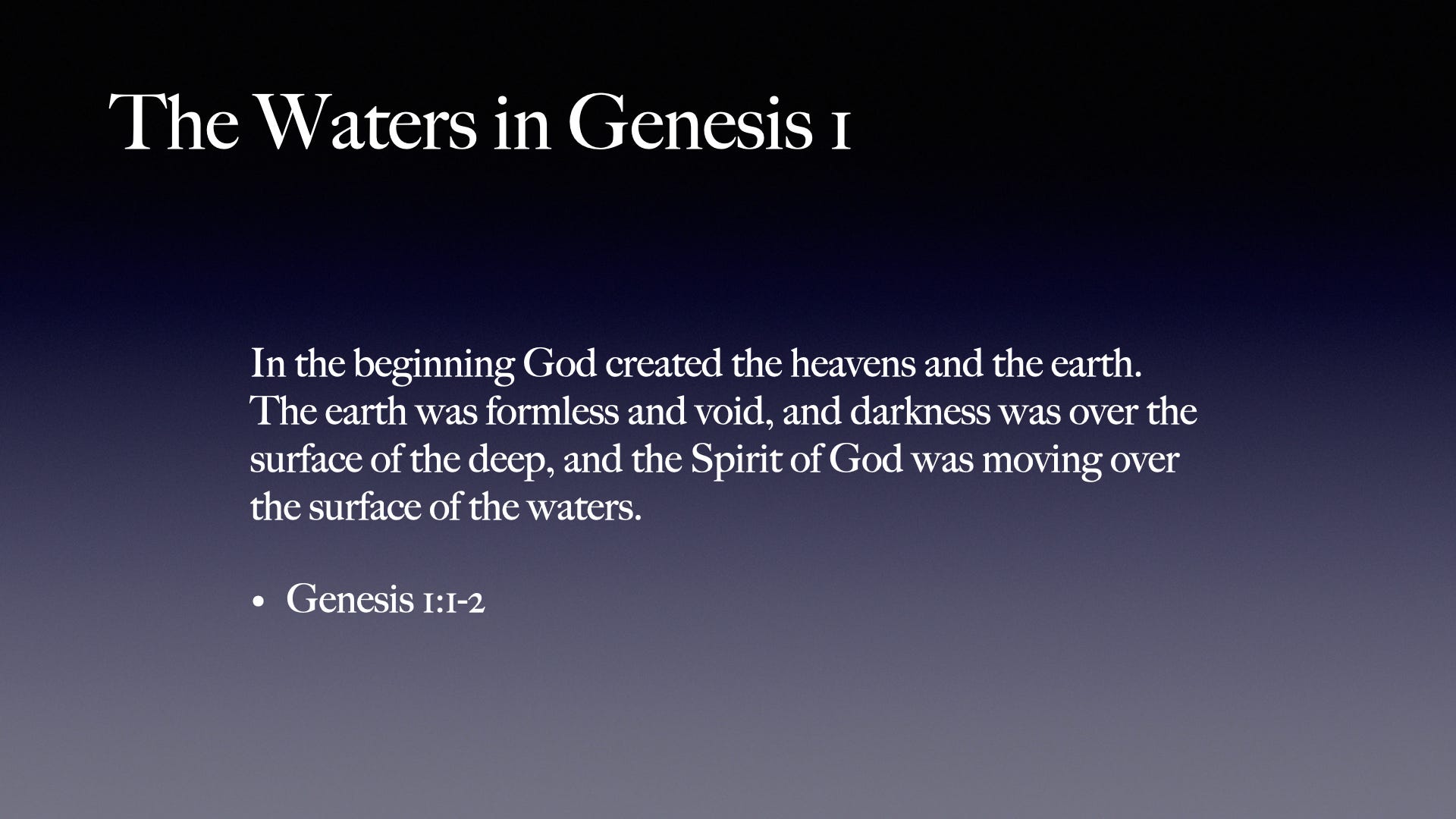
In this episode, we discuss the famous opening lines of the Bible where God creates the heavens and the earth, and then his spirit hovers over the surface of the deep waters.
But God did not create the waters of creation; he emerged out of them. Yet these waters have no name!
I believe the Biblical writers intentionally left the waters unnamed because they were working to take away the name of the mother goddess.
The Biblical writers are making the case for monotheism, which requires the mother goddess be removed from the minds and beliefs of the people.
By taking away the name and stories of the mother goddess, her priestesses and prophetesses, the Biblical writers seek to take away their divinity. They do this many times in both the Old and New Testaments.
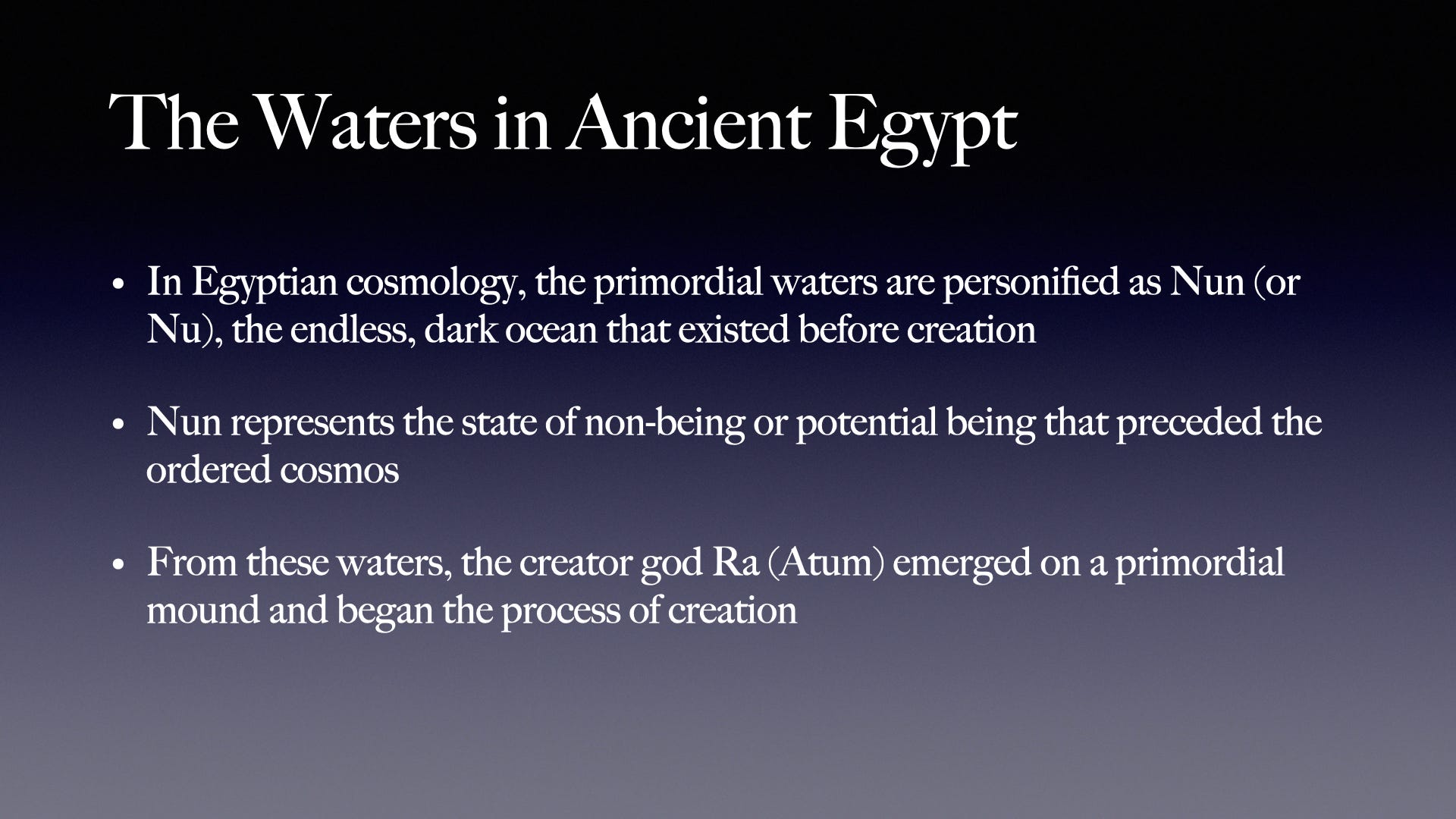
I argue that these Biblical waters of creation are equivalent to the chaotic waters of creation found in the neighboring cultures of Egypt, Mesopotamia, and India, where the mother goddess was strong.
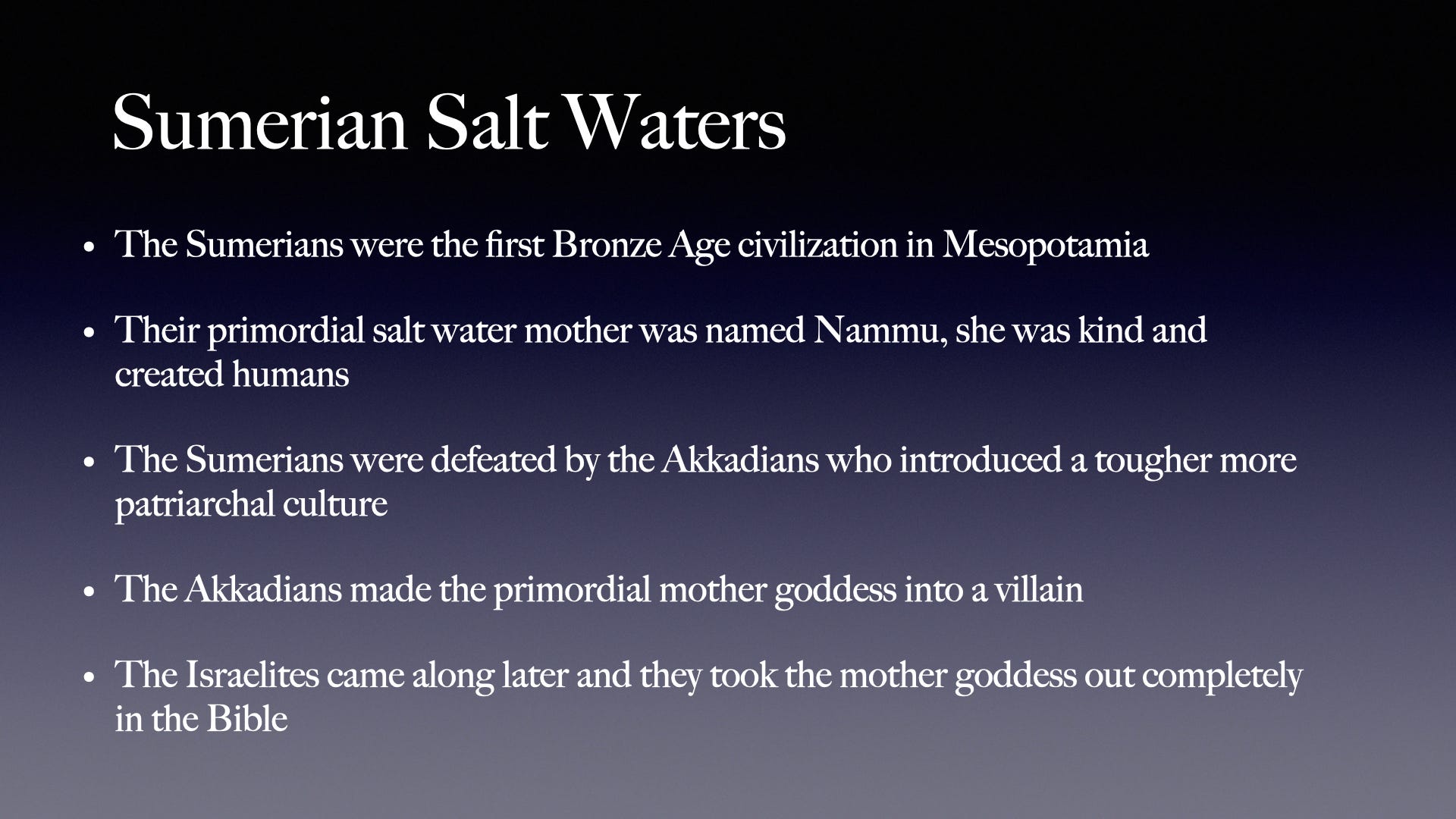
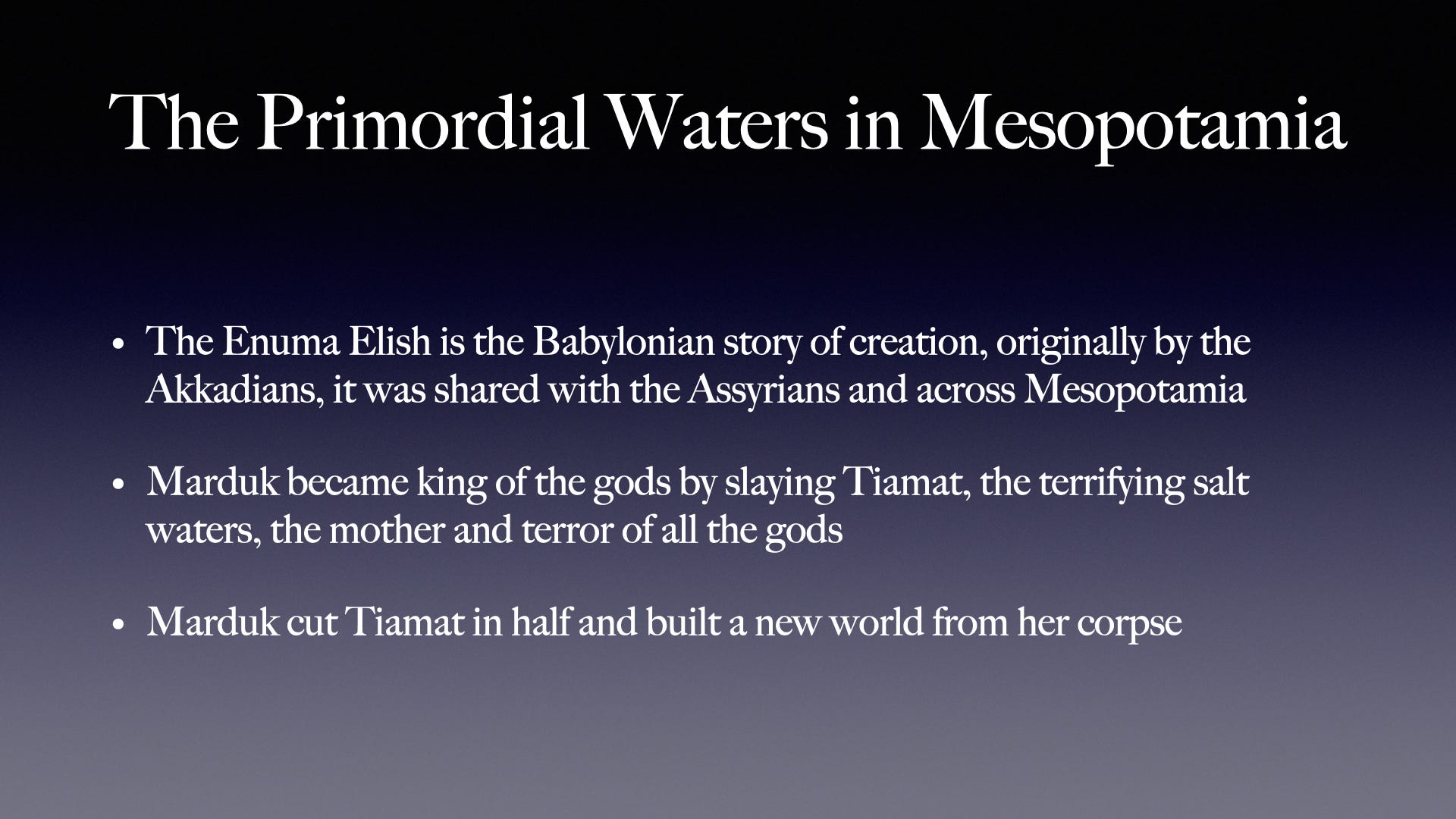
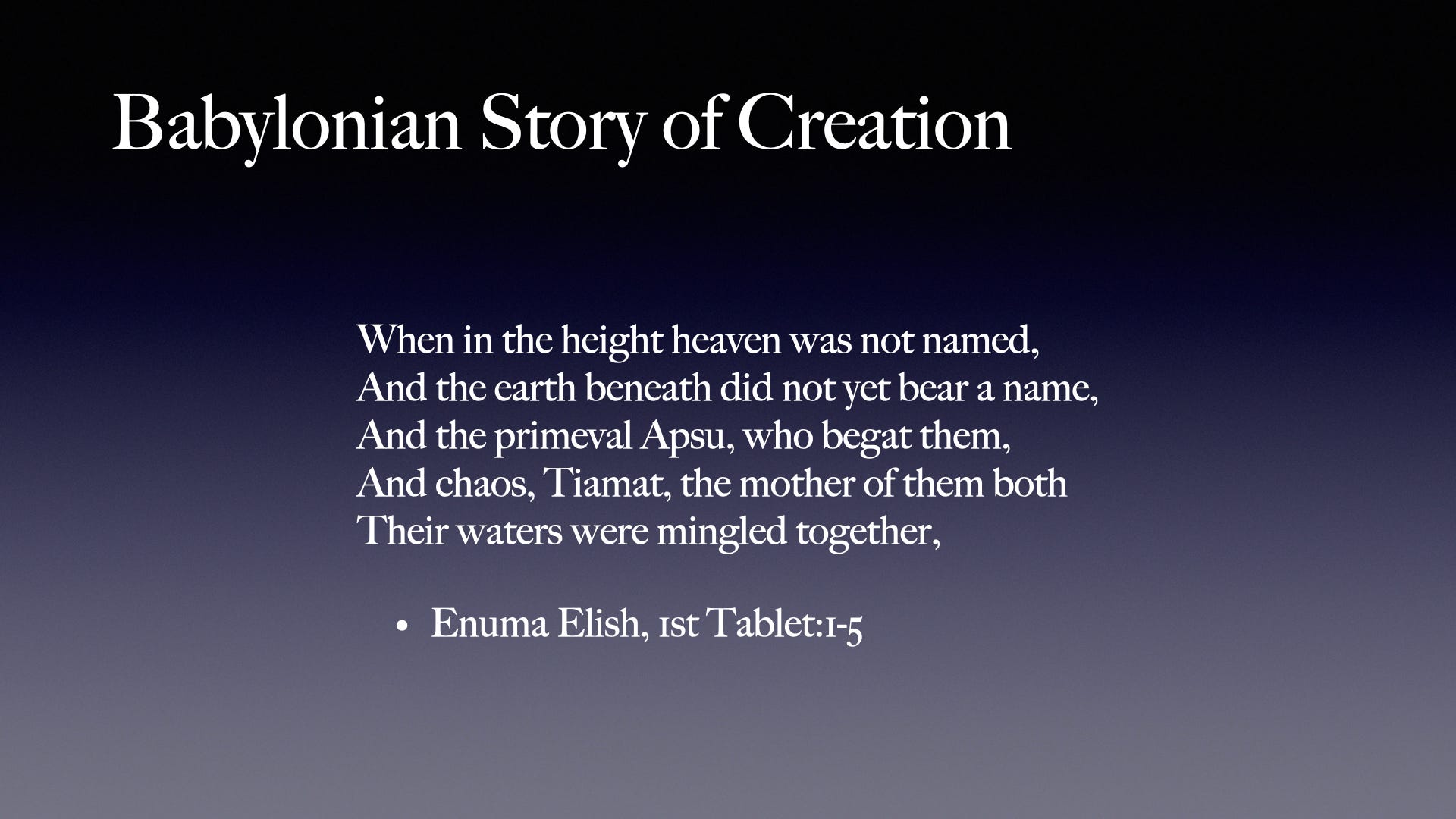
Mesopotamian cultures explicitly understood the chaotic waters of creation to be the original mother goddess, the virgin mother of the universe who birthed her own mate and all the gods.
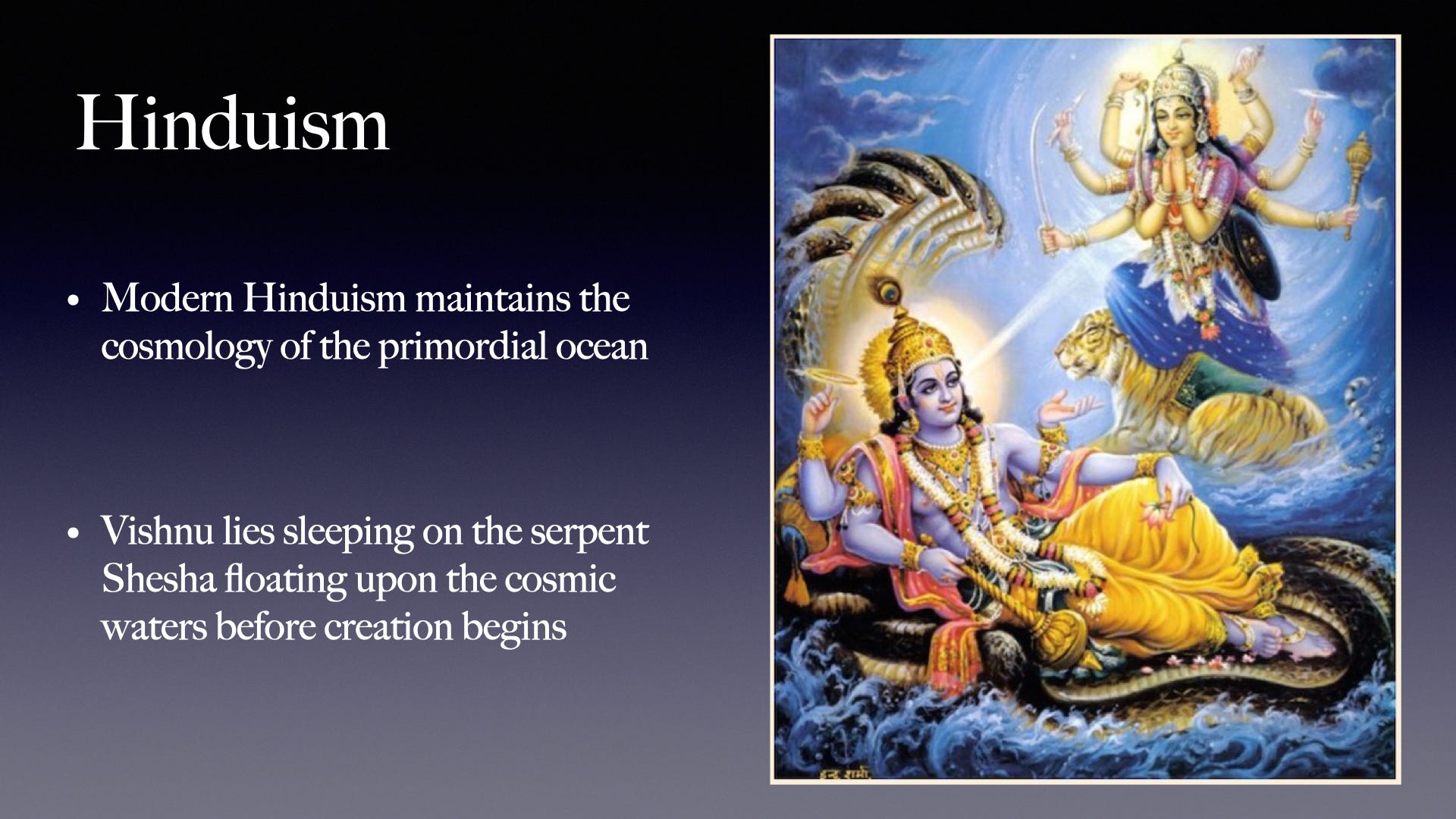
Contemporary Hinduism has preserved these understandings in the modern day. For the Hindus, the waters of creation are Shakti, the feminine divine, the source mother.
She is the material world, all the matter and energy of the cosmos, the eternal cycle of creation and destruction.
Next week: Genesis 2 - Eve is Asherah, and the Garden of Eden story is the divorce papers signed, sealed, and delivered.
